


Volumetrics meal plan, big plates, fewer calories.
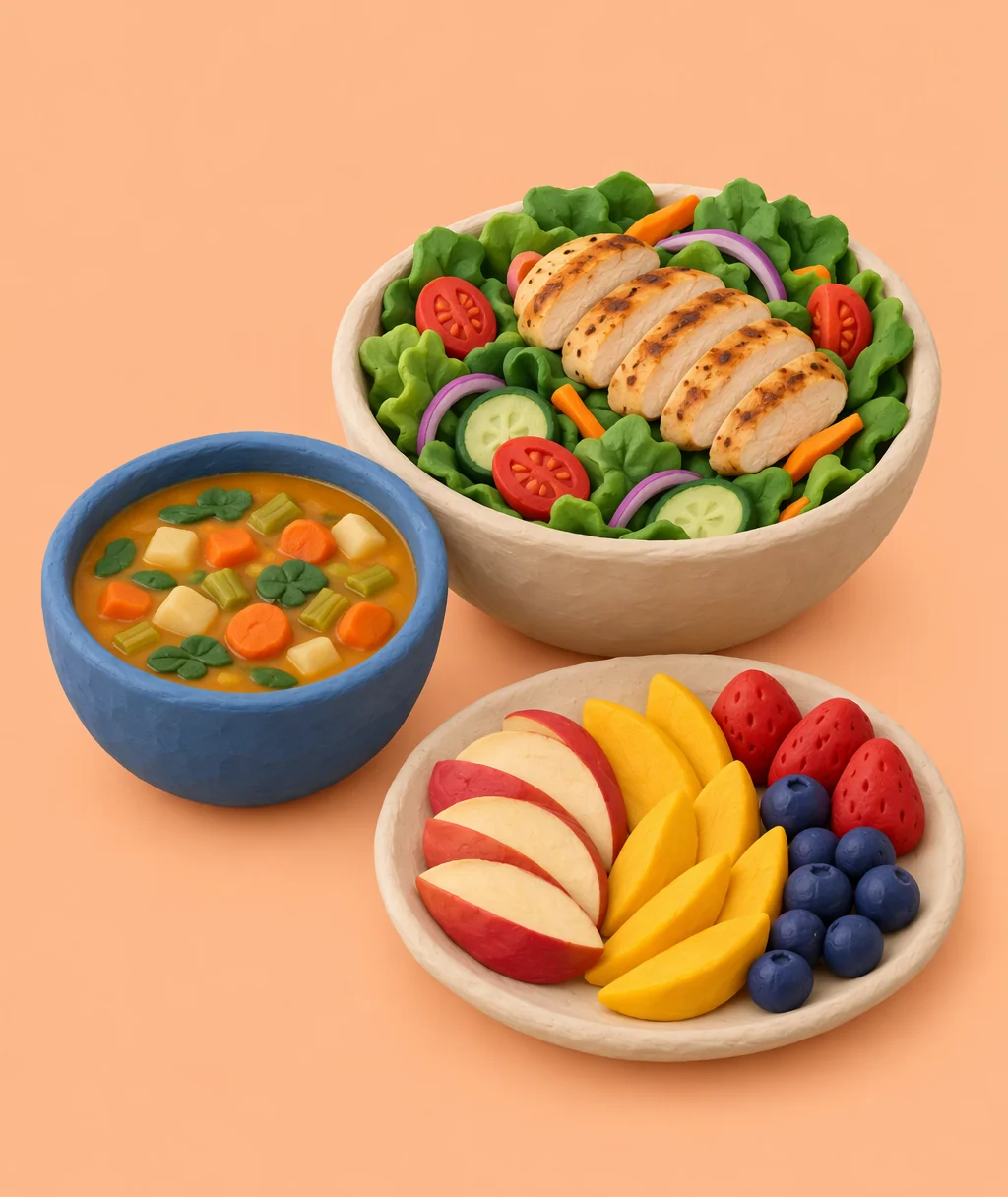
The Volumetrics diet, created by Barbara Rolls, fills your plate with low-calorie-density foods like vegetables, fruit and broth soups.
What is the Volumetrics diet?
An eating plan created by nutrition scientist Barbara Rolls in 2000, per Cleveland Clinic. You divide a food's calories by its weight in grams to get its calorie density, then fill up on the low-density foods.
Reviewed October 28, 2026. SourcesThe rules
Three habits do most of the work
Fill up on category one foods
Fruit, non-starchy vegetables, nonfat dairy and broth soups are the base.
Add lean protein and whole grains
Chicken, fish, beans, potatoes and brown rice sit in category two.
Keep dense foods small
Nuts, oil and cheese still fit, in small measured amounts.
Sample week
Seven days of big, light meals
About 1,550 to 1,670 calories a day. Scale portions to your needs. Find your number
Built from Cleveland Clinic and Dietary Guidelines advice.
Day 1Monday
 BreakfastYogurt with berries and oats1 cup plain nonfat Greek yogurt, 1 cup strawberries, ½ cup blueberries, ¼ cup dry oats.
 LunchChicken salad with chickpeas3 oz chicken breast, 2 cups spinach, ½ cup chickpeas, tomato, cucumber, ¼ avocado, 1 tsp olive oil, 1 cup grapes.
 SnackApple with cottage cheese1 large apple, ½ cup low-fat cottage cheese, 1 cup baby carrots, 10 almonds.
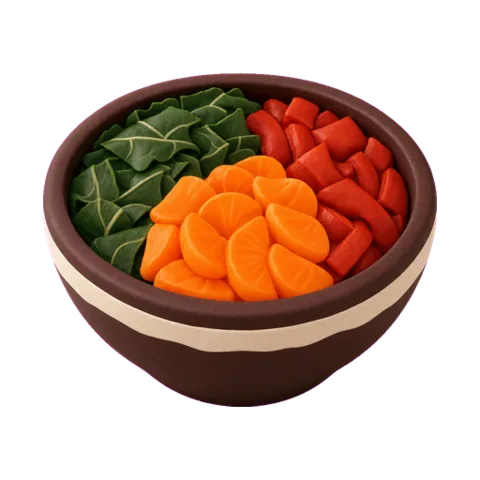 DinnerVegetable soup and shrimp rice bowl2 cups broth vegetable soup, 4 oz shrimp, 1 cup broccoli, ½ pepper, ¾ cup cooked brown rice, 1 tsp olive oil.
About 1,620 kcal122 g protein43 g fiber
See the other 6 days
Day 2Tuesday
- BreakfastOvernight oats with strawberries½ cup dry oats, 1 cup skim milk, 1 cup strawberries, 1 banana, 1 tbsp peanut butter.
- LunchLentil soup with chicken and salad1 cup lentil soup (½ cup cooked lentils, carrot, celery, onion, broth), 3 oz chicken, 2 cups spinach, cucumber, 1 tsp olive oil.
- SnackCottage cheese with melon¾ cup low-fat cottage cheese, 1 cup cantaloupe, 10 almonds.
- DinnerCod with potato and broccoli5 oz baked cod, 1 medium baked potato, 2 cups broccoli, 2 tsp olive oil, lemon.
About 1,550 kcal125 g protein35 g fiber
Day 3Wednesday
- BreakfastVeggie scramble with fruit2 eggs, 1 cup spinach, tomato, 1 slice whole-wheat toast, 1 tsp olive oil, 1 orange.
- LunchChicken and cabbage wrap3 oz chicken, 1 small whole-wheat tortilla, 2 cups shredded cabbage, carrot, ¼ cup salsa, 1 tsp olive oil, 1 cup grapes.
- SnackHummus and vegetable plate¼ cup hummus, 1 cup carrot sticks, ½ pepper, 2 cups cucumber, ½ whole-wheat pita, 1 kiwi.
- DinnerTurkey meatballs with zucchini4 oz turkey meatballs, 3 cups zucchini noodles, ½ cup low-sodium tomato sauce, 1 tbsp Parmesan, 1 tsp olive oil, ½ cup cooked quinoa.
About 1,600 kcal110 g protein38 g fiber
Day 4Thursday
- BreakfastFruit and yogurt bowl1 cup plain nonfat Greek yogurt, 1 banana, ¾ cup blueberries, ¼ cup dry oats, 1 tsp chia seeds.
- LunchBig salad with tuna1 can (5 oz) tuna in water, 2 cups spinach, tomato, cucumber, carrot, ½ cup chickpeas, 1 tsp olive oil, 1 apple.
- SnackStrawberries with cottage cheese¾ cup low-fat cottage cheese, 1 cup strawberries, 10 almonds.
- DinnerChicken and vegetable soup bowl4 oz chicken, 2 cups broth vegetable soup, ½ cup cooked brown rice, 1 cup green beans, 1 tsp olive oil.
About 1,600 kcal145 g protein39 g fiber
Day 5Friday
- BreakfastEggs with fruit and toast2 eggs in 1 tsp olive oil, 1 slice whole-wheat toast, 1 orange, 1 cup strawberries.
- LunchVegetable and bean soup with chicken2 cups broth vegetable soup, ½ cup cannellini beans, 3 oz chicken breast, 1 tsp olive oil, 1 slice whole-wheat toast.
- SnackCucumber with hummus and grapes¼ cup hummus, 2 cups cucumber, 1 cup grapes, 1 cup baby carrots.
- DinnerSalmon with potato and salad4 oz baked salmon, 1 medium potato, 2 cups spinach, tomato, 2 tsp olive oil.
About 1,650 kcal102 g protein38 g fiber
Day 6Saturday
- BreakfastYogurt with peach and granola1 cup plain nonfat Greek yogurt, 1 peach, 2 tbsp granola, 10 almonds.
- LunchChicken salad with pita4 oz chicken, ½ whole-wheat pita, 2 cups spinach, tomato, cucumber, 2 tsp olive oil, 1 cup grapes.
- SnackEdamame with fruit1 cup shelled edamame, 1 banana, 1 cup baby carrots.
- DinnerBaked cod with broccoli and quinoa5 oz baked cod, 2 cups broccoli, ¾ cup cooked quinoa, 2 tsp olive oil.
About 1,610 kcal138 g protein36 g fiber
Day 7Sunday
- BreakfastEggs with avocado and fruit2 eggs, 1 slice whole-wheat toast, ¼ avocado, 1 orange, ½ cup plain nonfat Greek yogurt.
- LunchChicken soup with potato4 oz chicken, 2 cups broth vegetable soup, 1 medium potato, 1 cup carrots.
- SnackApple with peanut butter1 large apple, 1 tbsp peanut butter, ¾ cup plain nonfat Greek yogurt.
- DinnerShrimp and pepper rice bowl5 oz shrimp, ¾ cup cooked brown rice, 2 cups broccoli, ½ pepper, 1 tsp olive oil.
About 1,670 kcal140 g protein38 g fiber
Shopping list
What to buy
See the full shopping list (9 foods)
Most days
 Soup and salad baseLow-sodium broth, cabbage, celery, canned tomatoes, lentils, lemonslentils
 Lean protein and dairyChicken breast, cod, shrimp, tuna, turkey, nonfat yogurt, cottage cheesechicken breastcottage cheesegreek yogurt


Now and then



Frozen vegetables and canned beans cost less and keep the week simple.
Make it yours
This week is a sample. Alma builds yours.
- Meals fit to your goal and the foods you like
- Log a meal by photo, voice or text in about 10 seconds
- Every meal gets an Alma Score from 0 to 100

Questions
What else do people ask?
What foods do you eat on the Volumetrics diet?
Fruit, non-starchy vegetables, nonfat dairy and broth soups are category one. Lean meat, legumes, potatoes and whole grains are category two. Cleveland Clinic says no food is off limits, but dense foods stay small.
How many calories is this meal plan?
About 1,550 to 1,670 calories a day, with roughly 100 to 145 grams of protein and 32 to 43 grams of fiber. Cleveland Clinic cites 1,400 calories for the diet's weight loss target, so scale portions to your own plan.
Do you have to count calories on Volumetrics?
Calorie density is the basis of the plan, so counting is built in. Cleveland Clinic suggests that if counting is hard for you, you can track how many foods you eat from each of the four categories instead.
Can you eat nuts and oil on Volumetrics?
Yes, in small amounts. Cleveland Clinic puts nuts, seeds and oils in category four, at 4 to 9 calories per gram, to be eaten sparingly. It notes this lumps healthy fats with candy, so a small handful of almonds beats chips.
Does Volumetrics help with weight loss?
Cleveland Clinic describes it as a filling, mostly plant-based plan meant for the long term. It says people may lose weight more slowly but have a good chance of keeping it off. No plan works for everyone.
Do you eat soup on Volumetrics?
Broth-based soups are category one foods, per Cleveland Clinic. This plan uses homemade vegetable soup at a few meals. Cleveland Clinic also notes all that soup can get dull, so rotate the vegetables.
How does Alma help with a Volumetrics diet?
Log a meal by photo, voice or text in about 10 seconds. Each meal gets an Alma Score from 0 to 100, drawing on Harvard's Alternate Healthy Eating Index, so you can see how much vegetable and fiber came with the calories.
Sources
Written by Alma from the sources below and reviewed October 28, 2026. Calories and protein are estimates. This is general information, not medical advice. If you manage a health condition or take medication, check changes with your clinician. Editorial standards
Get a week built around you.
Tell Alma your goal and the foods you like. It plans the meals and scores each one.