Post-surgery meal plan, protein at every meal.
Recovery from surgery takes calories and protein, and Cleveland Clinic suggests protein at every meal.


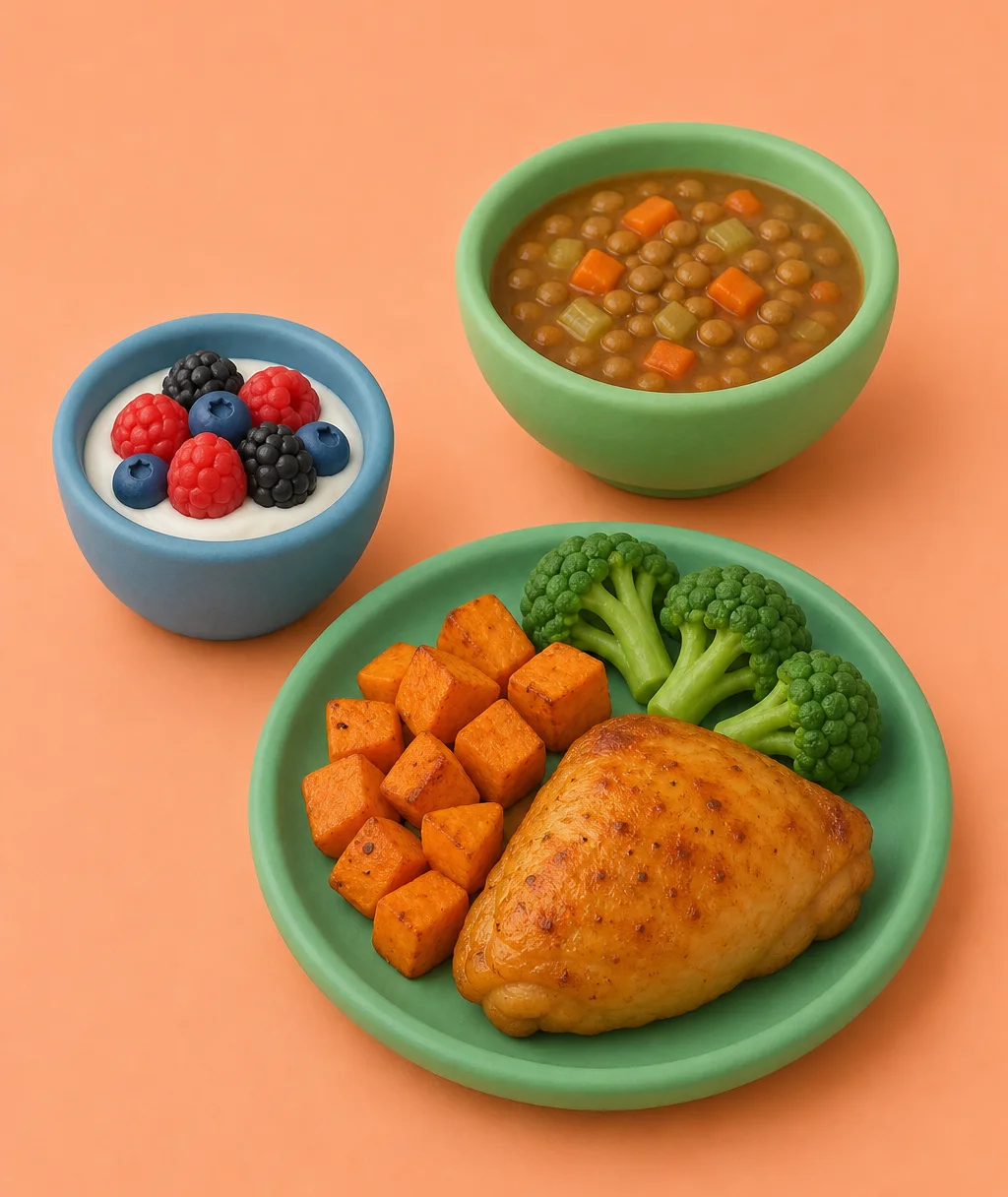

What should you eat after surgery?
Cleveland Clinic suggests protein at every meal and enough calories overall, plus vitamin C foods like bell peppers, broccoli, citrus, kiwi and strawberries, and zinc foods like fish, shellfish, eggs, dairy and poultry. Your surgeon may give you specific orders for the first days, and those come first.
Sources checked November 20, 2026. SourcesThree habits for recovery meals
Protein at every meal
Cleveland Clinic suggests protein at each meal, and eating that part first.
Color for vitamin C and zinc
Peppers, broccoli, kiwi and berries for vitamin C. Fish, eggs and dairy for zinc.
Add fiber slowly, drink often
Mayo Clinic notes opioid pain medicine can cause constipation. Sip fluids all day.
Seven days with protein at every meal
About 1,920 to 2,010 calories a day, with 108 to 113 g of protein. Scale portions to your needs. Find your number
Built from ESPEN and Cleveland Clinic advice.
Follow your surgeon's diet orders first. After gut, mouth or throat surgery, or with diabetes or kidney disease, ask your care team which foods and how much protein fit you. This week's 108 to 113 g of protein a day may be too much with kidney disease.
Day 1Monday
 BreakfastGreek yogurt with berries and oats1 cup 2% Greek yogurt, ½ cup blueberries, ½ cup strawberries, ¼ cup dry oats, 2 tsp honey
 LunchLentil soup with whole-wheat toast½ cup cooked lentils, 1 cup carrots, ½ cup tomatoes, 1 cup low-sodium broth, 5 tsp olive oil, 2 slices whole-wheat toast
 SnackCottage cheese with kiwi½ cup 2% cottage cheese, 1 kiwi, 1 oz almonds
 DinnerBaked chicken with sweet potato and broccoli4 oz baked chicken breast, 1½ cups baked sweet potato, 1 cup broccoli, 5 tsp olive oil
About 1,920 kcal110 g protein43 g fiber
The other 6 days
Day 2Tuesday
- BreakfastScrambled eggs with spinach and toast2 eggs scrambled with 1 cup spinach in 3 tsp olive oil, 2 slices whole-wheat toast, 1 orange
- LunchTurkey and black bean rice bowl4 oz lean ground turkey, ½ cup black beans, 1 cup cooked brown rice, ½ cup bell pepper, salsa
- SnackApple with peanut butter1 apple, 2 tbsp peanut butter
- DinnerSalmon with quinoa and green beans4 oz baked salmon, 1 cup cooked quinoa, 1 cup green beans, 1 tbsp olive oil, lemon
About 2,000 kcal110 g protein36 g fiber
Day 3Wednesday
- BreakfastOatmeal with banana and walnuts½ cup dry oats cooked in 1 cup 1% milk, 1 banana, 1 oz walnuts, cinnamon
- LunchChicken and hummus wrap bowl3 oz grilled chicken, ¼ cup hummus, 1 cup cooked quinoa, cucumber, ½ cup bell pepper, 1 cup spinach, 2 tsp olive oil
- SnackGreek yogurt with strawberries¾ cup 2% Greek yogurt, 1 cup strawberries, 1 tsp honey
- DinnerBeef and broccoli stir-fry with rice3 oz lean sirloin, 1 cup broccoli, ½ cup carrots, 1 cup cooked brown rice, 4 tsp oil, 1 tsp low-sodium soy sauce
About 1,940 kcal113 g protein34 g fiber
Day 4Thursday
- BreakfastPeanut butter banana toast with milk2 slices whole-wheat toast, 1½ tbsp peanut butter, ½ banana, 2 tsp honey, 1 cup 1% milk
- LunchTuna and white bean salad3 oz canned tuna, ½ cup chickpeas, ½ cup tomatoes, ½ cup cucumber, 5 tsp olive oil, lemon, 1 slice whole-wheat bread, 1 orange
- SnackHard-boiled eggs, apple and almonds2 hard-boiled eggs, 1 apple, ½ oz almonds
- DinnerCod with roasted potatoes and spinach4 oz baked cod, 1½ cups roasted potatoes, 1 cup cooked spinach, 4 tsp olive oil
About 1,940 kcal108 g protein35 g fiber
Day 5Friday
- BreakfastCottage cheese and berry bowl¾ cup 2% cottage cheese, ½ cup raspberries, ¼ cup dry oats, 2 tsp honey
- LunchChicken and vegetable soup3 oz chicken, 1 cup potatoes, 1 cup carrots, ½ cup peas, 2 cups low-sodium broth, 1 tbsp olive oil, 2 slices whole-wheat bread
- SnackKiwi and almonds2 kiwis, 1 oz almonds
- DinnerShrimp with rice and peppers4 oz shrimp, 1½ cups cooked white rice, 1 cup bell pepper, 1 cup broccoli, 4 tsp olive oil, garlic
About 1,920 kcal113 g protein39 g fiber
Day 6Saturday
- BreakfastSpinach and cheddar omelet2 eggs, ½ oz cheddar, 1 cup spinach, 2 tsp olive oil, 1 slice whole-wheat toast, 1 cup strawberries
- LunchLentil and quinoa salad½ cup cooked lentils, 1 cup cooked quinoa, ½ cup cucumber, ½ cup tomatoes, 5 tsp olive oil, lemon
- SnackGreek yogurt with blueberries1 cup 2% Greek yogurt, ½ cup blueberries, 2 tsp honey
- DinnerTurkey meatballs with pasta4 oz lean ground turkey, 1½ cups cooked pasta, ½ cup tomato sauce, 1 cup zucchini, 4 tsp olive oil
About 2,010 kcal110 g protein29 g fiber
Day 7Sunday
- BreakfastBlueberry oat pancakes with yogurt½ cup oats blended with 1 egg and ½ cup 1% milk, cooked in 2 tsp butter, ½ cup blueberries, ½ cup Greek yogurt, 2 tsp maple syrup
- LunchChicken and avocado sandwich2 slices whole-wheat bread, 3 oz roast chicken, ½ avocado, spinach, tomato, 1 pear
- SnackHummus, carrots and almonds¼ cup hummus, 1 cup baby carrots, ½ oz almonds
- DinnerSalmon with sweet potato and broccoli5 oz baked salmon, 1 cup baked sweet potato, 1 cup broccoli, 4 tsp olive oil
About 1,950 kcal112 g protein43 g fiber
What to buy
See the full shopping list (8 foods)
Most days
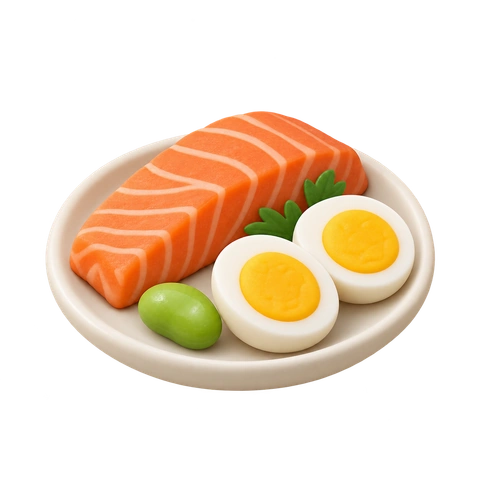 Lean proteinChicken, salmon, cod, shrimp, canned tuna, lean turkey, sirloin, eggschicken breastsalmonegg


Now and then
- Large meals when appetite is lowCleveland Clinic suggests smaller, more frequent meals instead
If you had gut, mouth or throat surgery, check this list with your surgeon first.
This week is a sample. Alma builds yours
Meals fit to your goal and the foods you like, each with an Alma Score from 0 to 100.

What else do people ask?
How soon can you eat after surgery?
For most surgeries, soon. The ESPEN practical guideline on nutrition in surgery calls early oral feeding the preferred way to eat after surgery and supports restarting oral feeding as early as possible. It also notes underfeeding is a risk factor for complications. Your surgical team sets your timing.
How much protein do you need after surgery?
It depends on you and the surgery, so Cleveland Clinic suggests asking your provider. This week runs 108 to 113 g of protein a day, spread across all four meals. No guideline sets that number. Cleveland Clinic notes too much protein can cause kidney issues, so if you have kidney disease, check with your care team before eating this much protein.
How do you avoid constipation after surgery?
Mayo Clinic notes opioid pain medicine can cause constipation and nausea. MedlinePlus suggests adding fiber slowly, drinking 8 to 10 cups of liquid a day and moving when you can. This week includes oats, lentils, beans, fruit and vegetables, with 29 to 43 g of fiber a day.
What if you have no appetite after surgery?
Cleveland Clinic suggests smaller, more frequent meals and eating the protein part of your plate first. Snacks in this week, like Greek yogurt, cottage cheese, eggs and hummus, add protein in small portions. Frequent sips help you stay hydrated.
How many calories is this meal plan?
The week runs about 1,920 to 2,010 calories a day, with 108 to 113 g of protein and 29 to 43 g of fiber. The numbers come from USDA FoodData Central. Scale portions up or down to your needs and appetite.
How can Alma help after surgery?
Log each meal by photo, voice or text in about 10 seconds, so you can see whether protein shows up at every meal while you recover. Every meal gets an Alma Score from 0 to 100, which draws on Harvard's Alternate Healthy Eating Index. Alma builds a plan around your goal and the foods you like.
Sources
Written by Alma from the sources below. Sources checked November 20, 2026. Calories and protein are estimates. This is general information, not medical advice. If you manage a health condition or take medication, check changes with your clinician. Editorial standards
Get a week built around you
Log a meal by photo, voice or text in about 10 seconds.