Healthy diet after menopause, for bone, heart and muscle.
After menopause, women need 1,200 mg of calcium a day, per NIH, and heart risk rises.


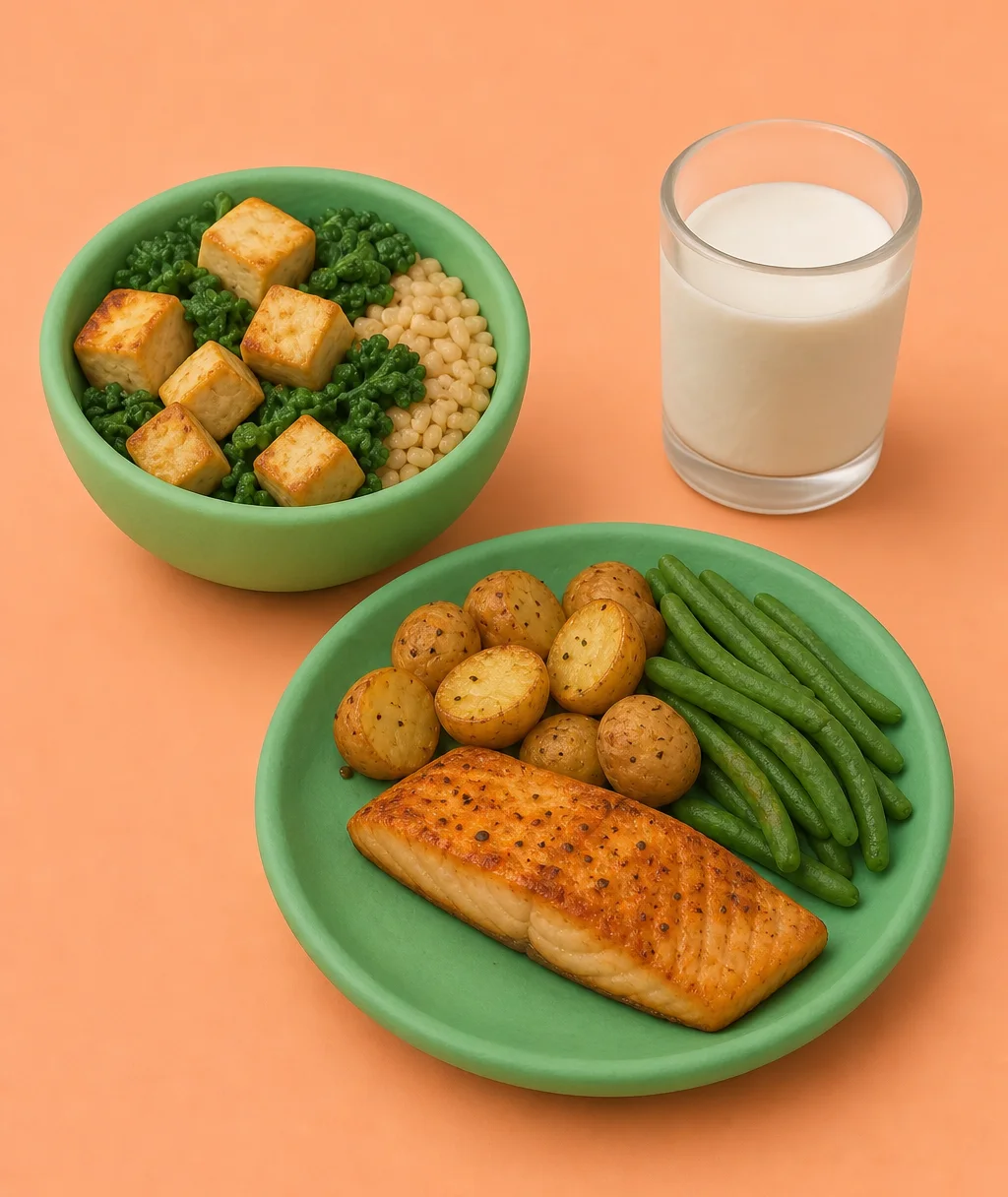
What is a healthy diet for postmenopausal women?
One built around bone, heart and muscle. NIH sets 1,200 mg of calcium a day for women 51 and older. AHA says heart risk rises after menopause and points to DASH and Mediterranean-style eating. Mayo Clinic suggests 1.0 to 1.2 g of protein per kg of body weight a day. This week covers all three with dairy, fish, soy, beans, whole grains and produce.
Sources checked November 21, 2026. SourcesThree habits after menopause
Calcium and vitamin D daily
NIH sets 1,200 mg of calcium a day for women 51+, plus 600 to 800 IU of vitamin D.
Protein at every meal
Mayo Clinic suggests 1.0 to 1.2 g of protein per kg of body weight a day, spread out.
Eat for your heart
AHA says heart disease risk rises after menopause. Favor fish, beans, nuts and olive oil.
Seven days for bone, heart and muscle
About 1,700 to 1,770 calories a day, with 100 to 119 g of protein, above Mayo's range for many women. Trim meat or fish to fit you. Find your number
Monday
 BreakfastRicotta toast with strawberries2 slices whole-wheat toast, 1/2 cup part-skim ricotta, 1 cup strawberries, 1 cup 1% milk
 LunchCanned salmon and white bean salad3 oz canned salmon with bones, 1/2 cup white beans, 2 cups greens and cucumber, 2 tsp olive oil, 1 whole-wheat pita
 SnackYogurt with peach and pumpkin seeds3/4 cup low-fat plain yogurt, 1 peach, 1/2 oz pumpkin seeds
 DinnerChicken with brown rice and bok choy3 oz chicken breast, 1 cup brown rice, 1 cup bok choy, 2 tsp olive oil
About 1,750 kcal119 g protein27 g fiber
Tuesday
- BreakfastCheddar and spinach egg scramble2 eggs, 1 oz cheddar, 2 cups spinach, 1 slice whole-wheat toast, 1 orange
- LunchTofu, kale and brown rice bowl4 oz calcium-set tofu, 1 cup kale, 1 cup brown rice, 1 tbsp tahini
- SnackApple, almonds and a glass of milk1 apple, 1/2 oz almonds, 1 cup 1% milk
- DinnerShrimp and broccoli whole-wheat pasta4 oz shrimp, 1 1/2 cups whole-wheat pasta, 1 cup broccoli, 2 tsp olive oil, 1 tbsp Parmesan
About 1,730 kcal113 g protein37 g fiber
Wednesday
- BreakfastSoy milk oats with blueberries1/2 cup dry oats in 1 cup fortified soy milk, 1 cup blueberries, 1 oz walnuts
- LunchSardine and chickpea salad with pita1 can sardines, 1/2 cup chickpeas, greens and tomato, 2 tsp olive oil, 1 whole-wheat pita
- SnackCottage cheese with strawberries1/2 cup 2% cottage cheese, 1 cup strawberries
- DinnerTurkey and black bean stuffed peppers3 oz turkey breast, 1/2 cup black beans, 2 peppers, 1/2 cup tomatoes, 1/2 oz cheddar, 1/2 cup brown rice
About 1,710 kcal110 g protein41 g fiber
Thursday
- BreakfastYogurt parfait with kiwi and oats3/4 cup nonfat Greek yogurt, 2 kiwis, 1/2 cup oats, 1 tsp honey
- LunchLentil soup with cheddar toast1 cup lentils, 1 cup carrots, 1/2 cup tomatoes, 1 cup low-sodium broth, 1 tsp olive oil, 2 slices whole-wheat toast, 1 oz cheddar
- SnackPear and pistachios1 pear, 1 oz pistachios
- DinnerBaked trout with potatoes and green beans4 oz trout, 1 baked potato, 1 cup green beans, 2 tsp olive oil
About 1,730 kcal100 g protein48 g fiber
Friday
- BreakfastMushroom omelet with toast and milk2 eggs, mushrooms and peppers, 1 tsp olive oil, 2 slices whole-wheat toast, 1 cup 1% milk
- LunchChicken and hummus wrap1 whole-wheat tortilla, 3 oz chicken breast, 1/4 cup hummus, greens and tomato, 1 apple
- SnackEdamame, almonds and an orange1/2 cup edamame, 1/2 oz almonds, 1 orange
- DinnerSalmon with bulgur and asparagus4 oz salmon, 1 cup bulgur, 1 cup asparagus, 2 tsp olive oil
About 1,720 kcal118 g protein41 g fiber
Saturday
- BreakfastCottage cheese toast with banana2 slices whole-wheat toast, 1/2 cup 2% cottage cheese, 1 banana, 1 tbsp chia
- LunchMozzarella, tomato and white bean salad1 oz part-skim mozzarella, 1 cup tomatoes, 1 cup white beans, greens, 2 tsp olive oil, 2 slices whole-wheat bread
- SnackSoy latte and almonds1 cup fortified soy milk, 1 oz almonds
- DinnerPork tenderloin with sweet potato and kale4 oz pork tenderloin, 1 sweet potato, 1 cup kale, 2 tsp olive oil, 1/2 cup quinoa
About 1,770 kcal109 g protein44 g fiber
Sunday
- BreakfastSpinach and feta egg wrap1 whole-wheat tortilla, 2 eggs, 1 cup spinach, 1 oz feta
- LunchTuna and chickpea quinoa bowl3 oz tuna, 1/2 cup chickpeas, 1 cup quinoa, cucumber, 2 tsp olive oil
- SnackYogurt with raspberries and chia3/4 cup low-fat plain yogurt, 1 cup raspberries, 1 tbsp chia
- DinnerChicken, cauliflower and chickpea curry3 oz chicken breast, 1 cup cauliflower, 1/2 cup chickpeas, 1/2 cup tomatoes, 2 tsp canola oil, 1 cup brown rice
About 1,730 kcal108 g protein42 g fiber
Ask your care team before taking calcium or vitamin D supplements, and about bone density tests. With kidney disease, ask how much protein fits you; this week runs 100 to 119 g a day.
Built from NIH ODS, AHA and Mayo Clinic advice.
What to buy
Most days
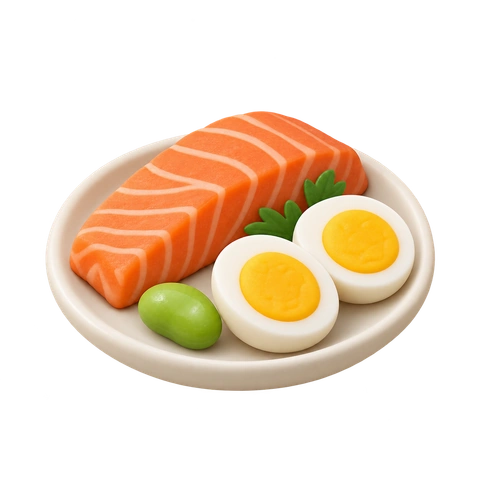 Calcium-rich dairy1% milk, low-fat and Greek yogurt, cottage cheese, ricotta, mozzarella, cheddar, fetagreek yogurtcottage cheese


Now and then



This week is a sample. Alma builds yours
Meals fit to your goal and the foods you like, each with an Alma Score from 0 to 100.
What else do people ask?
How much calcium do postmenopausal women need?
NIH's Office of Dietary Supplements sets 1,200 mg a day for women 51 and older. Milk, yogurt and cheese are the main sources, plus canned sardines and salmon with bones, kale, broccoli, bok choy, calcium-set tofu and fortified soy milk. Ask your care team before taking supplements.
How much vitamin D do you need after menopause?
NIH sets 15 mcg (600 IU) a day for adults up to age 70 and 20 mcg (800 IU) from age 71. Few foods have it naturally, so most comes from fortified foods. A cup of fortified milk has about 3 mcg (120 IU). Fatty fish like salmon and trout add more.
How much protein do you need after menopause?
Mayo Clinic suggests 1.0 to 1.2 g of protein per kilogram of body weight a day, spread across meals, from plant and animal foods. This week runs 100 to 119 g, more than many women need, so trim meat, fish or yogurt portions to fit you. With kidney disease, ask your care team first.
How many calories is this meal plan?
About 1,700 to 1,770 calories a day, with 100 to 119 g of protein and 27 to 48 g of fiber, estimated from USDA FoodData Central. Your needs depend on your size and activity, so scale portions up or down.
How can Alma help after menopause?
Log a meal by photo, voice or text in about 10 seconds. Each meal gets an Alma Score from 0 to 100 that draws on Harvard's Alternate Healthy Eating Index, so you can see how your meals stack up. Alma builds a plan around your goal and the foods you like.
Sources
Written by Alma from the sources below. Sources checked November 21, 2026. Calories and protein are estimates. This is general information, not medical advice. If you manage a health condition or take medication, check changes with your clinician. Editorial standards
- NIH Office of Dietary Supplements, calcium fact sheet
- NIH Office of Dietary Supplements, vitamin D fact sheet
- Mayo Clinic Press, how much protein you need after menopause
- American Heart Association, what doctors want women to know about menopause and heart health
- American Heart Association, menopause and heart health: 4 tips
- Academy of Nutrition and Dietetics, nutrition and menopause
- USDA FoodData Central, for calorie and protein estimates
Get a week built around you
Log a meal by photo, voice or text in about 10 seconds.