CSID meal plan, low sucrose, starch as tolerated.
A CSID diet limits sucrose and often starch, then adds foods back as tolerance allows.


What is CSID?
Congenital sucrase-isomaltase deficiency is a genetic condition in which the body can't break down sucrose or maltose, according to MedlinePlus Genetics. Eating them can cause cramps, bloating, gas and diarrhea. It affects about 1 in 5,000 people of European descent.
Sources checked November 29, 2026. SourcesThree habits for a CSID week
Fruit from low sucrose lists
Berries, grapes, cherries, pears and kiwi. No table sugar or sweets.
Starch only if tolerated
Oats, rice and quinoa appear in small amounts, marked if tolerated.
Protein, dairy and fats
Meat, fish, eggs, plain dairy and oils carry most of the calories.
Seven low sucrose days for CSID
About 1,850 to 1,950 calories and 23 to 31 g of fiber a day. Scale portions to your needs. Find your number
Monday
 BreakfastSpinach and cheddar scramble with raspberries3 eggs scrambled in 2 tsp olive oil, 1 cup spinach, 1 oz cheddar (28 g), ¾ cup raspberries (90 g)
 LunchChicken, avocado and cucumber salad5 oz chicken breast (140 g cooked), ½ avocado (75 g), 1 cup cucumber, 1 cup cherry tomatoes, 2 cups lettuce, 1 oz feta (28 g), 1 tbsp olive oil
 SnackGreek yogurt with blackberries¾ cup plain 2% Greek yogurt (180 g), ¾ cup blackberries (110 g)
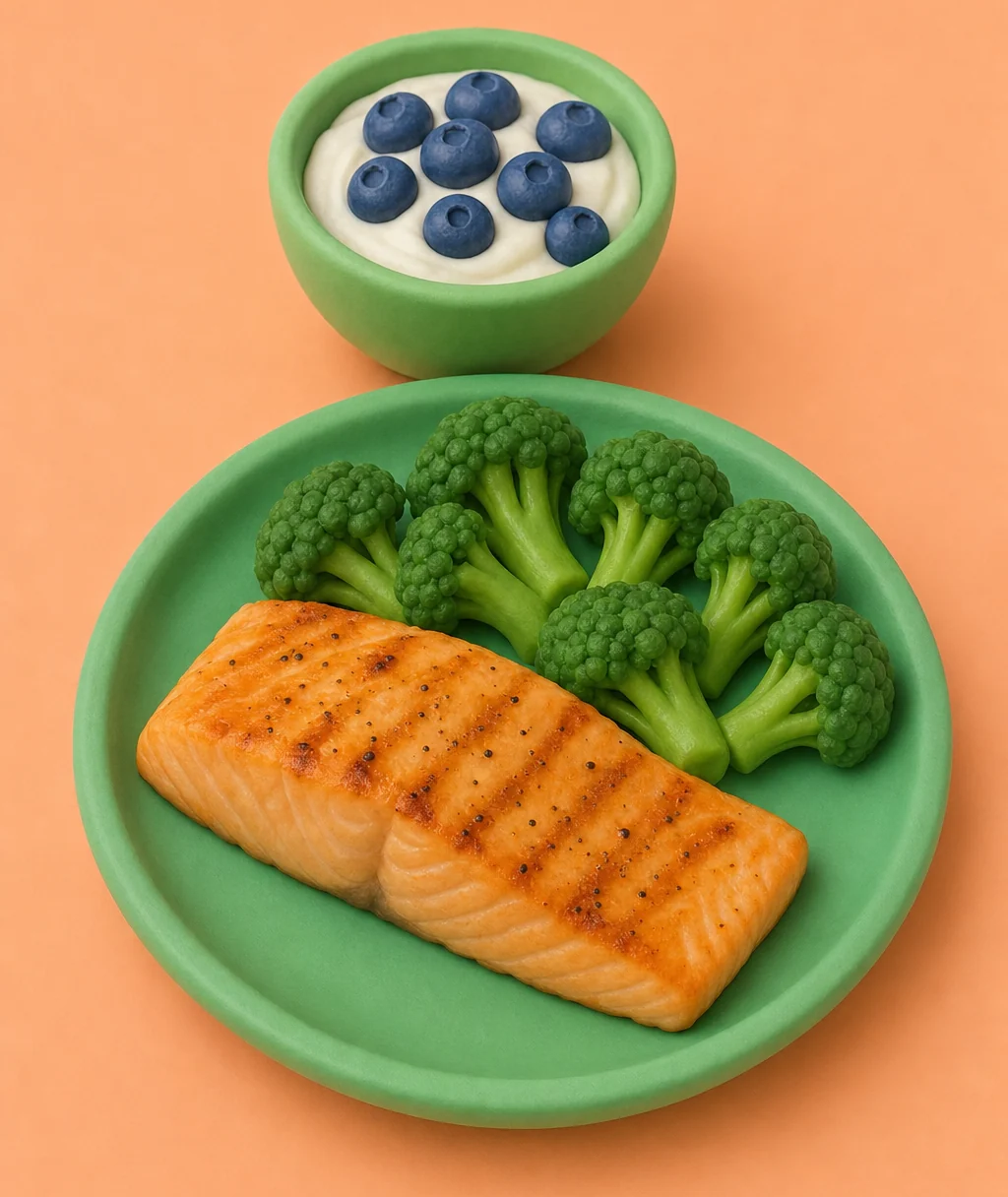
 DinnerSalmon with broccoli, then blueberry yogurt6 oz salmon (170 g cooked), 1½ cups steamed broccoli, 1 tbsp olive oil; after: ½ cup blueberries (75 g) with ½ cup plain yogurt (120 g)
About 1,910 kcal85 g carbs146 g protein
Tuesday
- BreakfastZucchini and feta omelet with strawberries3 eggs, 1 cup zucchini, 1½ oz feta (40 g), 2 tsp olive oil, 1 cup sliced strawberries (150 g)
- LunchTuna salad lettuce wraps with avocado1 can tuna (140 g drained), ¼ cup plain Greek yogurt, ½ avocado (75 g), 1 cup cucumber, 1 cup tomato, lettuce, 1 oz cheddar (28 g), 8 black olives, 1 tbsp olive oil
- SnackGrapes and cheddar1 cup grapes (150 g), 1 oz cheddar (28 g)
- DinnerPork tenderloin with green beans and cauliflower6 oz pork tenderloin (170 g cooked), 1½ cups green beans, 1½ cups roasted cauliflower, 1½ tbsp olive oil, 1 tbsp parmesan
About 1,870 kcal92 g carbs141 g protein
Wednesday
- BreakfastOats in milk with yogurt and raspberriesIf starch is tolerated: ⅓ cup rolled oats (30 g dry) cooked in 1 cup 2% milk, ½ cup plain Greek yogurt (120 g), ¾ cup raspberries (90 g), 2 boiled eggs
- LunchTurkey and bell pepper lettuce wraps5 oz ground turkey (140 g cooked) cooked in 1 tbsp olive oil, 1 cup bell pepper, lettuce leaves, ½ avocado (75 g), 1 oz cheddar (28 g)
- SnackCottage cheese with raspberries¾ cup 2% cottage cheese (170 g), ½ cup raspberries (60 g)
- DinnerBaked cod with asparagus and tomatoes6 oz cod (170 g cooked), 1½ cups asparagus, 1 cup roasted cherry tomatoes, 1½ tbsp olive oil, 2 tbsp parmesan (10 g), if tolerated ½ cup cooked white rice (80 g)
About 1,950 kcal121 g carbs157 g protein
Thursday
- BreakfastAvocado and egg plate with blueberries3 eggs fried in 1 tsp olive oil, ½ avocado (75 g), 1 cup sliced tomato, 1 oz feta (28 g), ¾ cup blueberries (110 g)
- LunchChicken and kale salad with avocado5 oz chicken breast (140 g cooked), 2 cups chopped kale, ½ avocado (75 g), 8 black olives, 2 tbsp parmesan, 1 tbsp olive oil and lemon juice
- SnackGreek yogurt with kiwi¾ cup plain 2% Greek yogurt (180 g), 1 kiwi (75 g)
- DinnerSteak with mushrooms, spinach and zucchini5 oz sirloin (140 g cooked), 1 cup sautéed mushrooms, 2 cups spinach, 1 cup zucchini, 1½ tbsp olive oil, if tolerated ½ cup cooked white rice (80 g)
About 1,900 kcal99 g carbs146 g protein
Friday
- BreakfastBroccoli and cheddar egg bake with strawberries3 eggs baked with ½ cup chopped broccoli, 1 oz cheddar (28 g) and 2 tsp olive oil, 1 cup sliced strawberries (150 g)
- LunchSalmon, cucumber and avocado salad5 oz salmon (140 g cooked), ½ avocado (75 g), 1 cup cucumber, 2 cups arugula, 2 tsp olive oil, if tolerated ½ cup cooked quinoa (90 g)
- SnackCherries with plain yogurt1 cup cherries (140 g), ½ cup plain 2% Greek yogurt (120 g)
- DinnerChicken thighs with cauliflower and green beans6 oz chicken thighs (170 g cooked), 1½ cups roasted cauliflower, 1 cup green beans, 1 tbsp olive oil, 1 oz feta (28 g), 8 black olives
About 1,880 kcal95 g carbs132 g protein
Saturday
- BreakfastYogurt with blackberries and toasted oatsIf starch is tolerated: 1 cup plain 2% Greek yogurt (240 g), 1 cup blackberries (145 g), 3 tbsp rolled oats (15 g) toasted, 2 boiled eggs
- LunchShrimp and zucchini skillet6 oz shrimp (170 g cooked), 1½ cups zucchini, 1 cup bell pepper, 1½ tbsp olive oil, ⅓ avocado (50 g), if tolerated ½ cup cooked white rice (80 g)
- SnackPear with cheddar1 medium pear (180 g), 1 oz cheddar (28 g)
- DinnerTurkey meatballs with zucchini noodles5 oz turkey meatballs (140 g cooked) bound with egg, 2 cups zucchini noodles, 1 cup chopped tomato, 1 oz mozzarella (28 g), 1½ tbsp olive oil
About 1,910 kcal119 g carbs147 g protein
Sunday
- BreakfastSpinach and mushroom omelet with blackberries3 eggs, 1 cup spinach, ½ cup mushrooms, 1 oz cheddar (28 g), 2 tsp olive oil, ¾ cup blackberries (110 g)
- LunchGrilled chicken with tomato and avocado5 oz chicken breast (140 g cooked), 1 cup tomato, ½ avocado (75 g), 1 cup cucumber, 1 oz feta (28 g), 2 tsp olive oil
- SnackCottage cheese with blueberries¾ cup 2% cottage cheese (170 g), ½ cup blueberries (75 g)
- DinnerBaked trout with asparagus and quinoa6 oz trout (170 g cooked), 1½ cups asparagus, 8 black olives, 1½ tbsp olive oil, if tolerated ½ cup cooked quinoa (90 g)
About 1,860 kcal84 g carbs148 g protein
Children with CSID need a pediatric GI dietitian. Work out how much sucrose and starch you tolerate with your care team before you widen the diet.
Built from JPGN, NHS Leeds and MedlinePlus advice.
What to buy
Most days
 Meat and eggsChicken, turkey, pork tenderloin, sirloin, eggschicken breastegg
 Plain dairyPlain Greek yogurt, cottage cheese, cheddar, feta, mozzarella, milkgreek yogurtcottage cheese


Now and then



Starch portions are marked if tolerated. Leave them out until your care team says to add them.

This week is a sample. Alma builds yours
Meals fit to your goal and the foods you like, each with an Alma Score from 0 to 100.
What else do people ask?
What foods can you eat with CSID?
NHS Leeds lists plain milk, plain and Greek yogurt, cheese, all fats and oils, and most vegetables as suitable. Its low sucrose fruit list includes avocado, raspberries, blackberries, strawberries, cherries, grapes, melon and pears.
What foods should you avoid with CSID?
Table sugar and foods made with it come first. NHS Leeds also lists carrots, peas, onion, sweet potato, sweetcorn, beetroot, parsnip, okra, and legumes and lentils to avoid. How much starch you limit depends on your own tolerance, per the 2024 JPGN review.
How do you add foods back with CSID?
The 2024 JPGN review describes starting sucrose-free and starch-free, then adding foods with 2% sucrose or less, and adding starch once sucrose tolerance is known. NHS Leeds suggests one new food at a time, 2 to 3 days apart. A food diary and a registered dietitian help.
Does enzyme replacement change the CSID diet?
The JPGN review notes that sacrosidase helps digest sucrose but not starch, so starch limits may still apply. Your care team decides whether it fits you and how to use it.
How many calories is this meal plan?
About 1,850 to 1,950 calories a day, with 132 to 157 grams of protein, 84 to 121 grams of carbs and 23 to 31 grams of fiber. Starch portions are optional, so carbs drop if you leave them out. For a child, follow the dietitian's plan.
How does Alma help with a CSID diet?
Log each meal by photo, voice or text in about 10 seconds, for an Alma Score from 0 to 100, drawing on Harvard's Alternate Healthy Eating Index. Alma builds a plan around your goal and the foods you like, and the food and symptom diary helps you track each food you add back.
Sources
Written by Alma from the sources below. Sources checked November 29, 2026. Calories and protein are estimates. This is general information, not medical advice. If you manage a health condition or take medication, check changes with your clinician. Editorial standards

Get a week built around you
Log a meal by photo, voice or text in about 10 seconds.