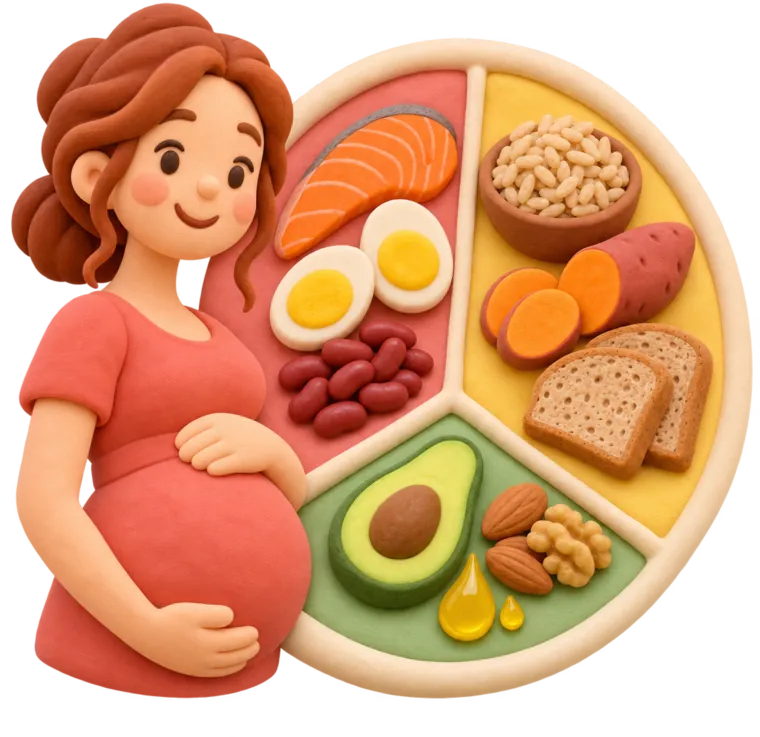


Pregnancy macro calculator
Protein, carbs and fat, for your week.
Protein needs rise later in pregnancy. Carbs have a 175 g floor. See your ranges.
Protein at week 20
70g a day
That’s 1.1 g per kg of your weight before pregnancy. This is the higher amount for the second half of pregnancy.
Ranges are based on about 2,490 calories a day. Carbs never drop below the 175 g minimum for pregnancy.
Gestational diabetes changes carb advice. If you have it, follow your care team’s plan.
Beyond the big three
Macros are only part of it. Folate, iron, iodine and choline needs all rise in pregnancy, and many prenatal vitamins contain little or no choline.
See your energy needs in the calorie calculator, or a sample week in the pregnancy meal plan.
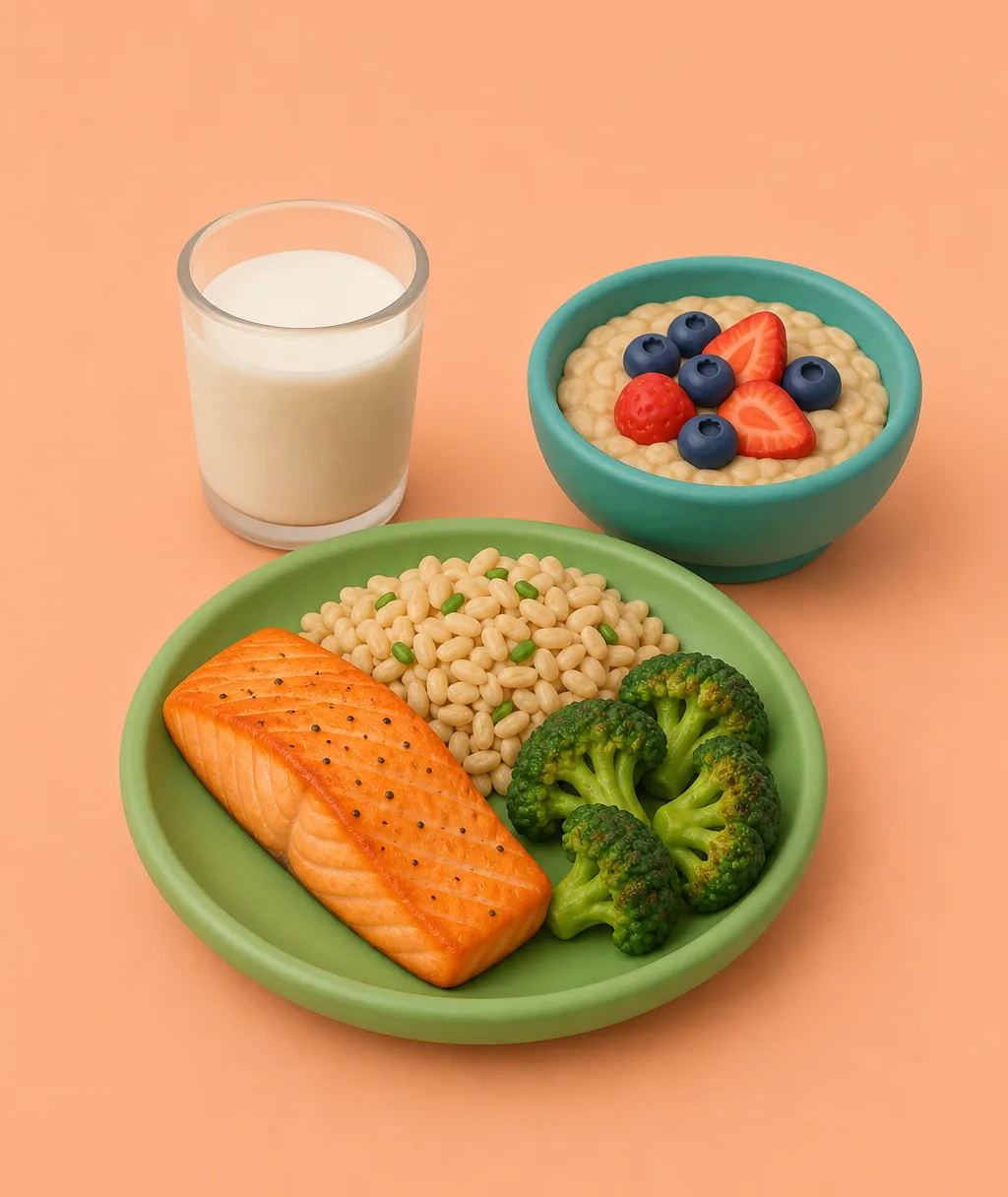
In the Alma app
Pregnancy nutrition, set up for you.
- Choose Pregnancy nutrition as your goal.
- Alma turns calorie counting off by default and applies pregnancy nutrient targets.
- Caffeine starts at a 200 mg daily default.
- Alma’s coach never suggests fasting or a calorie deficit.
Questions
What people ask
How much protein do I need while pregnant?
The protein RDA rises to 1.1 g per kg of body weight a day in the second half of pregnancy, about 71 g for the reference woman. In the first half, the usual 0.8 g per kg applies.
How many carbs do I need while pregnant?
The carbohydrate RDA in pregnancy is 175 g a day, up from 130 g. Carbs should give 45 to 65 percent of calories.
How much fat should I eat while pregnant?
Fat should give 20 to 35 percent of calories, the same range as before pregnancy. Fish low in mercury adds omega-3 fats.
How much fiber do I need while pregnant?
The adequate intake is 28 g a day. Fiber helps with constipation, which is common in pregnancy.
Why does protein jump at week 20?
The Institute of Medicine set the higher protein need for the second half of pregnancy. It gave a single amount for that period rather than a gradual rise, so the calculator switches at week 20.
Sources
Written by Alma from the primary sources below and reviewed November 13, 2026. Carb and fat ranges use the IOM 2005 calorie estimate, so they are estimates too. This is general information, not medical advice. Your care team knows your pregnancy, so check questions with them. Editorial standards
- National Academies. Dietary Reference Intakes: Macronutrients and water (summary table)
- Institute of Medicine. Dietary Reference Intakes for Energy, Carbohydrate, Fiber, Fat, Fatty Acids, Cholesterol, Protein, and Amino Acids (2005)
- USDA and HHS. Dietary Guidelines for Americans 2020-2025, Chapter 5 and Table A2-3

Eat well for two, without the guesswork.
Choose Pregnancy nutrition as your goal, and Alma applies pregnancy nutrient targets to every meal you log.