A perimenopause diet built on protein
What to put on the plate when your cycle, sleep and weight start to shift.
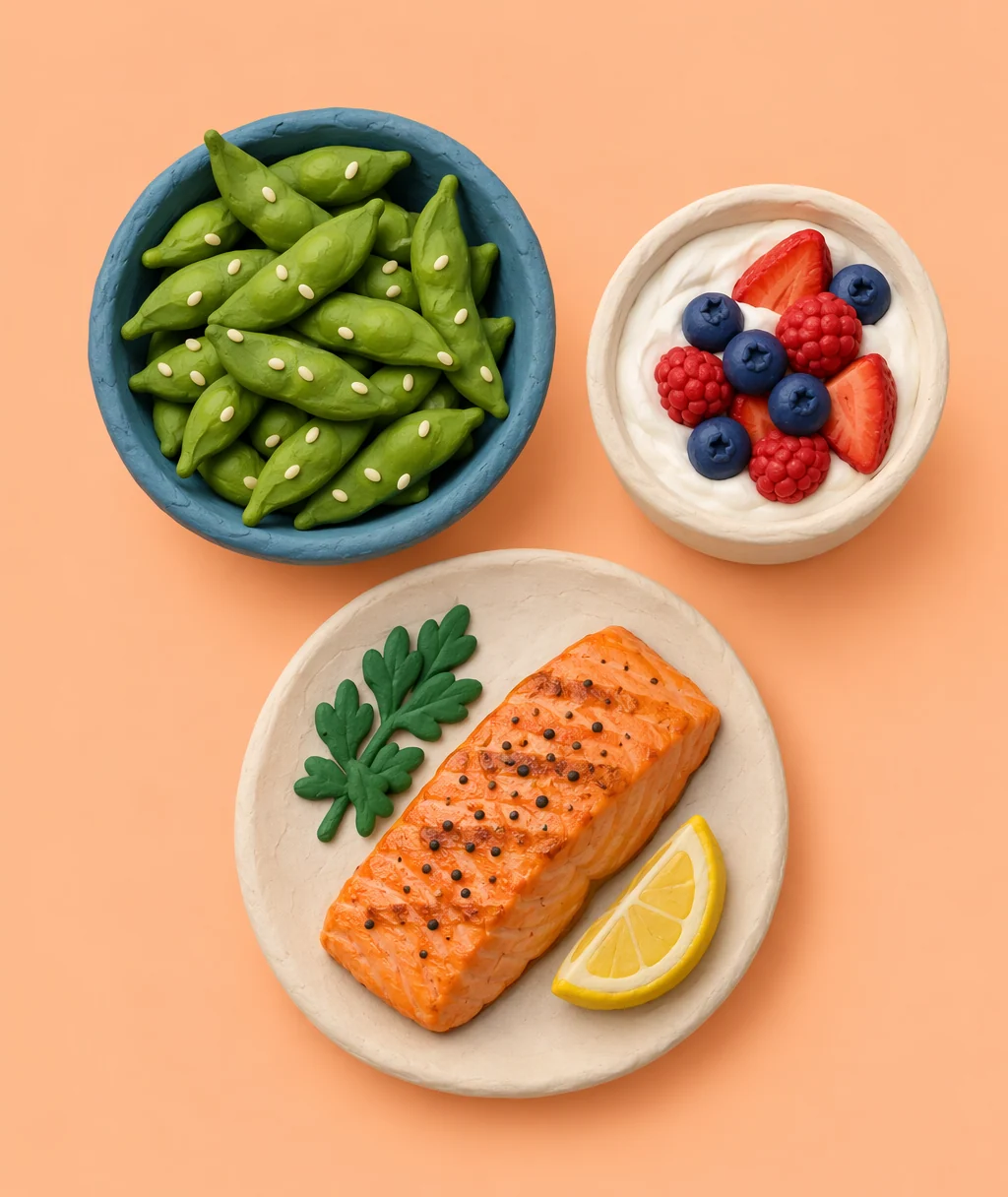

What should a perimenopause diet look like?
Cleveland Clinic advice is to eat plenty of vegetables, fruit, whole grains, lean protein and healthy fats, add calcium-rich foods like yogurt, milk or soy, and limit alcohol and caffeine. Weight gain is common in perimenopause as estrogen falls and metabolism slows.1
Built from Cleveland Clinic, Harvard and NHS advice. Reviewed November 13, 2026.Eat more
Eat more of these
Greek yogurt
Plain yogurt, milk, tofu and leafy greens.
1,200 to 1,500mg of calcium a day, Cleveland Clinic2
Ease off
Ease off these
Caffeine
Coffee, cola and energy drinks; more can worsen hot flashes.
400 mga day, level FDA cites for most adults8
Alma turns these foods into meals that fit your numbers.
Build my planGet Alma on AndroidGet the appA sample day
One day on a plate
 BreakfastGreek yogurt with berriesPlain yogurt, blueberries and a spoon of oats.
 LunchEdamame and salmon bowlEdamame, canned salmon and brown rice.
 SnackApple with almond butterOne apple and a tablespoon of almond butter.
 DinnerBaked salmon with greensSalmon, roasted broccoli and lentils.
What people ask
What is the best diet for perimenopause?
Cleveland Clinic advises plenty of fruits, vegetables, whole grains, lean protein and healthy fats, with less alcohol and caffeine. It also points to calcium-rich foods such as milk, yogurt and soy milk for bone health.
Why does perimenopause weight gain happen?
Cleveland Clinic says the shift in hormones slows metabolism, and that weight gain is very common once estrogen starts to decline. Falling estrogen can also affect bones and muscle mass. Eating nutritious foods and staying active can help.
How much protein do you need in perimenopause?
Harvard cites the National Academy of Medicine minimum for adults of 0.8 grams a day for each kilogram you weigh. Four ounces of grilled salmon has about 30 grams. Ask your clinician what suits you.
Does soy help with hot flashes?
A Cleveland Clinic doctor says soy from food may ease hot flashes and night sweats in some women, and prefers food to supplements. Tofu, edamame and soy milk are easy to add. It does not work for everyone.
How much calcium do you need each day?
Cleveland Clinic gives a target of about 1,200 to 1,500 milligrams a day. Milk, yogurt, soy milk, tofu and leafy greens all count. The gut absorbs about 500 milligrams at a time, so split any supplement dose and ask your clinician first.
Sources (8)
- Cleveland Clinic, Perimenopause: age, stages, signs and symptoms
- Cleveland Clinic, Menopause diet: what to eat to help manage symptoms
- Harvard T.H. Chan School of Public Health, Fiber
- Harvard T.H. Chan School of Public Health, Protein
- NHS, Why 5 A Day
- NHS, Calculating alcohol units
- Harvard T.H. Chan School of Public Health, Added sugar in the diet
- FDA, Spilling the beans: how much caffeine is too much
This guide is general education. Talk with your clinician before changing your diet or medicines.