A PCOS diet built on low GI food
What to put on the plate when insulin and androgens are out of balance.

What should you eat on a PCOS diet?
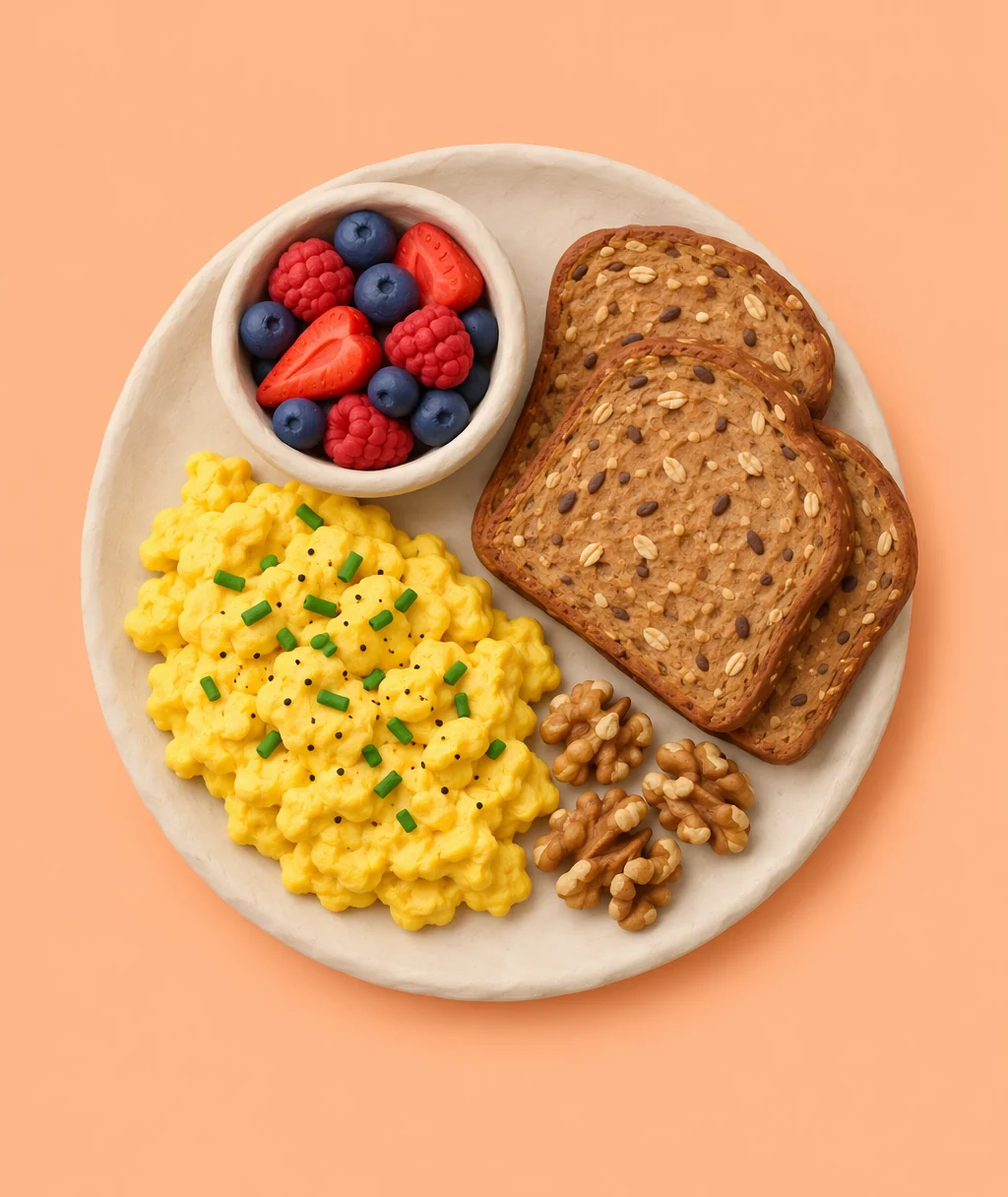
Cleveland Clinic says a PCOS diet should lean on high fiber foods such as whole grains, beans and vegetables, about 30 grams of protein at breakfast, and unsaturated fats from nuts, seeds and oily fish. It calls the low glycemic index diet the gold standard for blood sugar in people not taking insulin.1
Built from Cleveland Clinic, Harvard, MedlinePlus and NIDDK advice. Reviewed November 13, 2026.Eat more
Eat more of these
Protein at breakfast
Eggs, Greek yogurt or tofu before the carbs.
30 gprotein at breakfast, Cleveland Clinic1
Beans and lentils
Chickpeas, lentils and beans in soups and bowls.
55 or lessGI, the low band on the scale4
Vegetables and fruit
Fill half the plate at lunch and dinner.
1/2 platevegetables and fruit, Harvard plate6
Ease off
Ease off these
White bread and rice
Bagels, white bread and most packaged cereal.
70 or higherGI, the high band on the scale5
Alma turns these foods into meals that fit your numbers.
Build my planGet Alma on AndroidGet the appA sample day
One day on a plate
 BreakfastEggs on whole grain toastTwo eggs, whole grain toast, berries and walnuts.
 LunchChickpea and barley bowlChickpeas, barley, greens and olive oil.
 SnackYogurt with seedsPlain Greek yogurt and a spoon of chia.
 DinnerSalmon with lentilsBaked salmon, lentils and broccoli.

Blood sugar ranges7
- Normal
- Below 5.7%A1C percentage
- Prediabetes
- 5.7 to 6.4%Higher means more risk
- Diabetes range
- 6.5% or higherRepeat test to confirm
An A1C test reflects average blood sugar over about 3 months.
What people ask
What is the best diet for PCOS?
Cleveland Clinic points to the low glycemic index diet as the gold standard for blood sugar, with fiber from whole grains, legumes and vegetables, protein early in the day and unsaturated fats. It lists soda, baked goods, packaged snacks and white bread as foods to limit.
Is a low GI diet good for PCOS?
Harvard Health defines low GI as 55 or less, and MedlinePlus puts barley, bulgur, oatmeal, beans, nuts, milk and yogurt in that band. Slower carbs give a smaller blood sugar rise, which matters when PCOS comes with insulin resistance.
What foods should you avoid with PCOS?
Cleveland Clinic lists soda, baked goods, packaged snacks, white bread and refined grains as foods to limit, saying sugary foods and drinks can work against your goals. Keeping them occasional is the aim, not cutting whole food groups.
How much fiber do you need on a PCOS diet plan?
Harvard puts the target at 25 to 35 grams of fiber a day for adults, while most people eat about 15 grams. Oats, beans, berries, pears, chia and whole grain bread all count. Increase slowly and drink water to limit bloating.
Do you need to cut carbs on a PCOS diet?
Not necessarily. Cleveland Clinic advises choosing low starch vegetables and fruit, with protein first at breakfast, rather than removing carbs. Whole grains and legumes stay on the plate because their fiber slows digestion.
Sources (7)
- Cleveland Clinic, Following a healthy PMOS diet: why it matters and what to eat
- Harvard T.H. Chan School of Public Health, Fiber
- Harvard T.H. Chan School of Public Health, Added sugar in the diet
- Harvard Health, A good guide to good carbs: the glycemic index
- MedlinePlus, Glycemic index and diabetes
- Harvard T.H. Chan School of Public Health, Healthy Eating Plate
- NIDDK, The A1C test and diabetes
This guide is general education. Talk with your clinician before changing your diet or medicines.