Vitamin D deficiency: what to eat
Fatty fish, UV-exposed mushrooms and fortified milk carry the most. Eat them with a little fat.

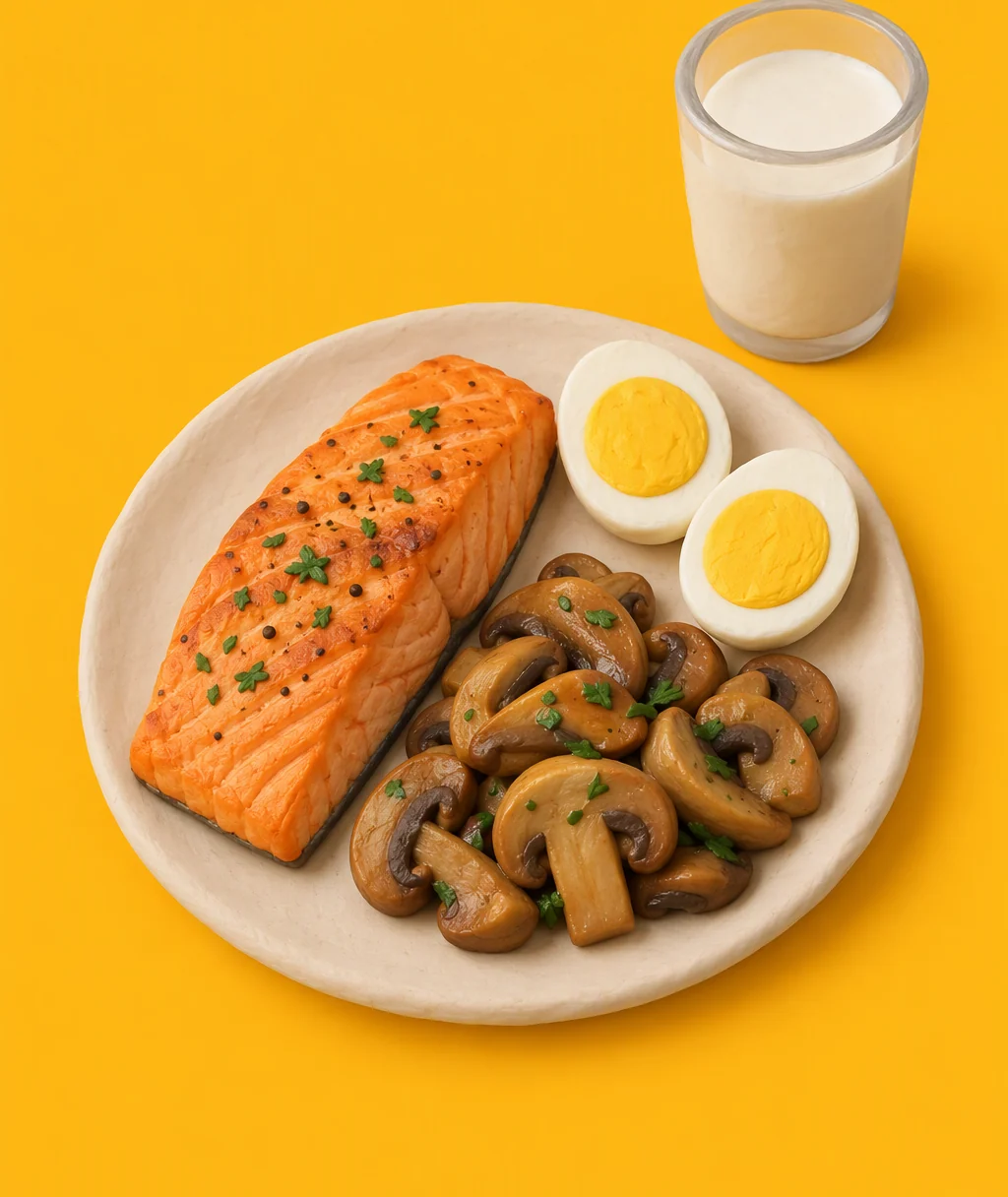

What foods help with vitamin D deficiency?
Trout, salmon, UV-exposed mushrooms and fortified milk or plant milk give the most vitamin D per serving. Adults need 600 IU a day, or 800 IU after 70. It is hard to get enough from food alone, so ask your clinician whether you also need a supplement.1
Built from NIH Office of Dietary Supplements advice. Reviewed November 18, 2026.Eat more
Eat more of these
UV-exposed mushrooms
Look for packs labeled as exposed to UV light.
366 IUin half a cup of UV-exposed mushrooms1
Ease off
Watch out for these
Alma turns these foods into meals that fit your numbers.
A sample day
One day on a plate
See the sample day, meal by meal
 BreakfastEggs and fortified cerealTwo scrambled eggs and fortified cereal with milk.
 LunchTuna and white bean saladCanned light tuna, white beans, greens and olive oil.
 SnackLatte with soy milkCoffee with soy milk fortified with vitamin D.
 DinnerSalmon with mushroomsBaked salmon, sauteed UV-exposed mushrooms and rice.

Vitamin D blood levels1
NIH ranges for the 25-hydroxy vitamin D test. Labs vary, so read yours with a clinician.

What else do people ask?
Do eggs have vitamin D?
Yes, a little. One large scrambled egg has about 44 IU, and the vitamin D is in the yolk. Three ounces of cooked sockeye salmon has about 570 IU, so eggs help but rarely cover a full day.
Do you need to take vitamin D with food?
It helps. Vitamin D is fat soluble, and NIH says it is best absorbed with a meal or snack that includes some fat. Eggs, fish, nuts or a little olive oil all count.
Can food alone fix a vitamin D deficiency?
Usually not. NIH says getting enough vitamin D from unfortified food alone is difficult, and Harvard notes that a supplement is the easiest way for most people to get enough. Talk with a clinician about whether you need one and how much.
How do I get enough vitamin D?
Food, sun and supplements all count. Eat fatty fish, fortified milk or plant milk and UV-exposed mushrooms. Your skin makes vitamin D in the sun, but clouds, age, darker skin and window glass cut how much. A blood test shows whether your level is enough.
What vitamin D level is normal?
NIH counts 20 ng/mL or higher as adequate for most people. MedlinePlus notes that many experts recommend 30 to 80 ng/mL. Ranges vary by lab, so ask your clinician what your number means.
This guide is general education. Talk with your clinician before starting a vitamin D supplement or changing your medicines.